Human resources has changed dramatically over the past decade. What was once viewed primarily as an administrative function has evolved into a strategic department that plays a direct role in employee experience, compliance, organizational culture, and business growth. Today’s HR leaders are expected to balance people-focused initiatives with increasingly complex operational responsibilities. Modern HR departments are finding new ways to support employees while helping organizations remain efficient and compliant. Understanding these trends provides insight into how HR is becoming one of the most influential functions within today’s businesses.
This evolution is also changing how businesses structure the HR function itself. Not every organization needs a full-time internal team to manage employee policies, compliance documentation, benefits administration, and occasional workforce challenges. For some growing businesses, outsourcing selected HR responsibilities can provide access to specialized support while controlling costs, strengthening compliance, and allowing internal leaders to remain focused on core operations.
Strong Benefits Administration Creates a Foundation for Employee Satisfaction
Every successful organization needs systems that protect and support its workforce. In many ways, employee benefits serve as a protective fence around the employee experience. Just as a fence establishes boundaries and provides security for valuable assets, a well-managed benefits program helps employees feel supported while reducing confusion and administrative challenges.
This is one reason many organizations turn to employee benefits administration services to manage increasingly complex healthcare plans, retirement programs, leave policies, and other employee offerings. As benefit packages become more sophisticated, employers need reliable processes to ensure employees understand their options and receive the support they need. Effective administration helps improve accuracy, reduce compliance risks, and create a smoother experience for both employees and HR teams.
Benefits have become an important factor in recruitment and retention efforts. Employees are paying closer attention to healthcare options, retirement planning resources, wellness programs, and family-friendly policies when evaluating employers. Organizations that invest in strong benefits administration often position themselves more competitively in today’s labor market while reducing the administrative burden placed on internal HR staff.
Automation is Reshaping HR Operations
One of the most significant trends affecting human resources is the growing adoption of automation. Businesses across industries are implementing automation tools to streamline repetitive processes, improve efficiency, and reduce manual workloads. Human resources departments are increasingly benefiting from these advancements.
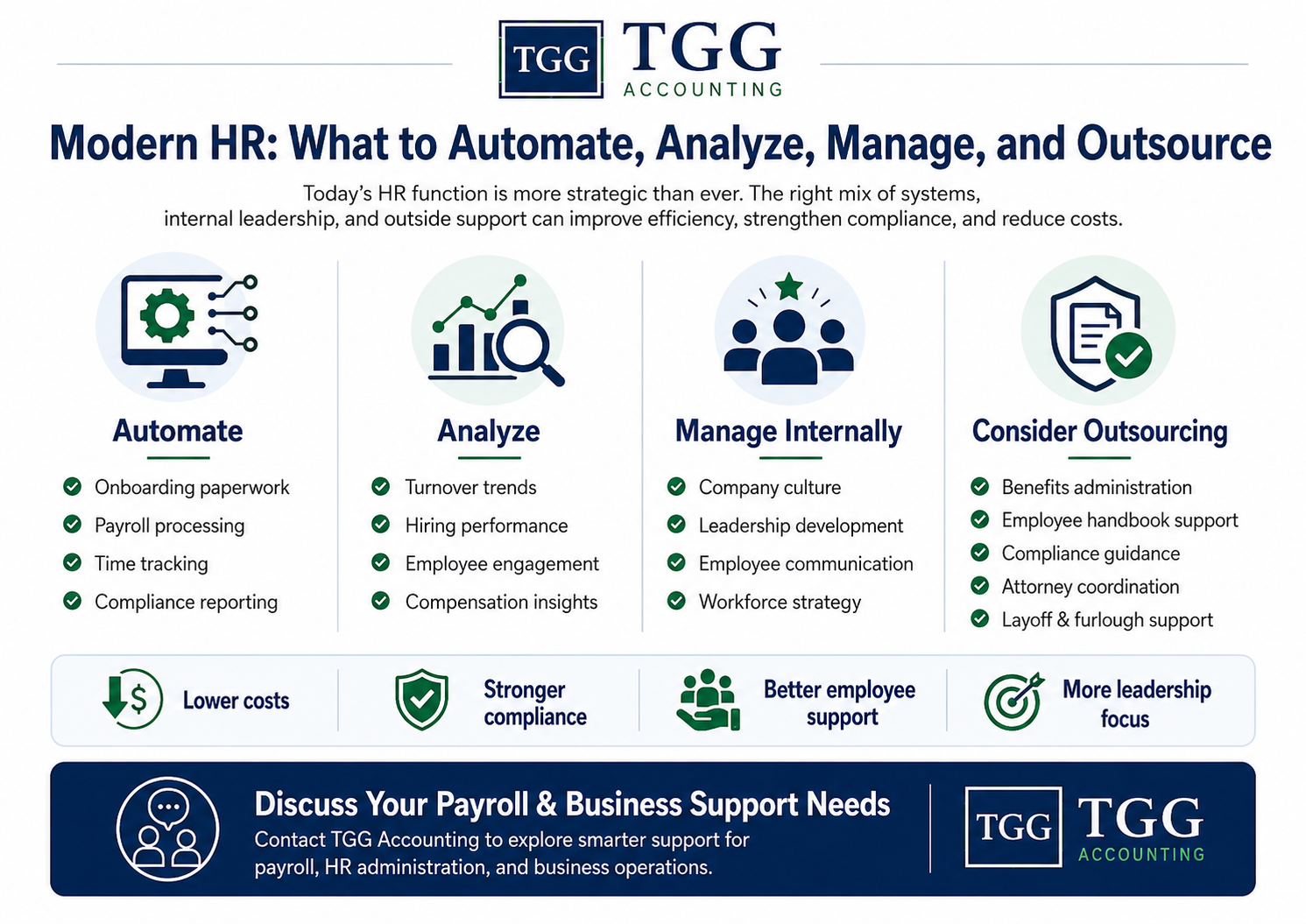
Many routine HR tasks can now be automated, including onboarding paperwork, payroll processing, benefits enrollment, employee record management, time tracking, and compliance reporting. Automation allows HR professionals to spend less time on administrative tasks and more time focusing on employee engagement, leadership development, and workforce planning. Organizations that successfully implement automation often see improvements in both accuracy and productivity.
Data-Driven Decision Making is Becoming the Norm
Human resources have traditionally relied heavily on experience, intuition, and interpersonal skills. While those qualities remain important, modern HR departments are increasingly using data to support decision-making and measure outcomes. Workforce analytics provide valuable insights into employee turnover, hiring effectiveness, engagement levels, productivity trends, and compensation strategies.
By analyzing workforce data, organizations can identify potential issues before they become larger problems. For example, employee engagement surveys may reveal emerging concerns within specific departments, allowing leaders to take proactive action. Similarly, hiring data can help organizations refine recruiting strategies and improve candidate quality.
The ability to make informed decisions based on reliable information is becoming a competitive advantage. HR professionals who understand how to interpret and apply workforce data are helping organizations improve retention, strengthen culture, and allocate resources more effectively.
Compliance and Risk Management are Taking Center Stage
Employment regulations continue to evolve at the federal, state, and local levels. From wage and hour requirements to workplace safety standards and anti-discrimination laws, organizations face an increasingly complex compliance landscape. As a result, risk management has become a major priority for HR departments.
Modern HR teams are implementing more sophisticated compliance monitoring systems to ensure policies remain aligned with changing regulations. Employee handbooks, training programs, documentation practices, and reporting procedures are receiving greater attention as organizations seek to reduce legal and financial risks.
Compliance is no longer viewed solely as a legal responsibility. It has become an important component of organizational reputation and employee trust. Companies that consistently follow employment laws and maintain transparent workplace practices are often better positioned to attract talent and maintain positive workplace cultures.
Employee Experience is Driving HR Strategy
One of the most notable shifts in recent years is the growing emphasis on employee experience. Organizations increasingly recognize that employee satisfaction directly influences productivity, retention, customer service, and overall business performance. As a result, HR leaders are paying closer attention to every stage of the employee journey.
This focus extends beyond compensation and benefits. Employees want meaningful work, opportunities for growth, supportive managers, flexible work arrangements, and a sense of belonging. HR departments are developing initiatives designed to improve communication, strengthen leadership, and create more positive workplace environments.
The concept of employee experience has become especially important in competitive labor markets. Organizations that prioritize employee well-being often find it easier to attract and retain skilled professionals. As workforce expectations continue to evolve, employee experience will likely remain a central focus of HR strategy.
FAQs About Modern HR Trends, Compliance, and Outsourcing
What are the biggest trends shaping modern human resources?
Some of the biggest trends shaping modern HR include better benefits administration, more automation, data-driven decision-making, stronger compliance oversight, and a greater focus on employee experience. Many businesses are also exploring outsourced support for selected HR functions to improve efficiency and control costs.
How is automation changing HR operations?
Automation is helping HR teams reduce time spent on repetitive administrative work. Tasks like onboarding paperwork, payroll processing, benefits enrollment, time tracking, and compliance reporting can often be streamlined, allowing HR professionals to focus more on strategy and employee support.
Why is HR compliance becoming more important?
HR compliance is becoming more important because employment laws and workplace regulations continue to change. Businesses need to stay current with wage and hour rules, documentation requirements, workplace policies, and other obligations in order to reduce risk and maintain employee trust.
What HR functions can be outsourced?
Businesses can outsource a wide range of HR functions, including benefits administration, payroll support, employee handbook development, compliance guidance, documentation processes, and help with occasional workforce issues. Outsourcing can be especially useful for companies that do not need a full-time internal HR department.
When should a business consider outsourcing HR support?
A business may want to consider outsourcing HR support when internal staff are stretched thin, compliance responsibilities are growing more complex, or leadership wants to reduce administrative burden. Outsourced support can help businesses access specialized knowledge without the cost of building a larger in-house team.
How does HR affect employee experience?
HR plays a major role in employee experience by shaping communication, benefits, policies, leadership support, and workplace processes. When HR systems are well managed, employees often have a smoother, more consistent experience throughout their time with the company.
Read More >>>

Janine Smith is a Consulting CFO with TGG. She has a wealth of experience in accounting process development and management, supervising both TGG staff and client’s internal staff (banking, AR, AP, inventory management, payroll), and working with many different types of accounting software. She has worked with clients to develop KPIs that fit their current needs and coached them to support the goals of the business. One of her favorite tasks is budget development and using that as a tool to help organizations meet their goals.