If you want to be successful in business, you need to master the art of inventory management. Days Inventory Outstanding (DIO) and other key performance indicators can shed light on a company’s health and stability.
What is Days Inventory Outstanding (DIO)?
One financial metric that tracks how long it takes for a company to sell all of its inventory is the DIO. It reveals how efficiently a business controls its stock and how fast it can transform that stock into revenue.

Why is DIO Important?
- Efficient Inventory Management: DIO is a useful metric for evaluating a company’s inventory management efficiency. A low DIO suggests that inventory is moving rapidly, which helps to reduce the amount of money tied up in unsold products. Managing your inventory efficiently can save you money on storage, reduce the chances of items becoming obsolete, and make the most of your available funds.
- Cash Flow Management: For the majority of companies, inventory is a major investment. By mastering DIO, businesses can minimize capital locked up in inventory by optimizing inventory levels to match customer demand. Freeing up funds for other investments or operational needs, this optimization can have a favorable influence on cash flow.
- Operational Performance: DIO is an important factor in assessing a company’s operational performance. A consistently low DIO indicates that inventory management practices are on point, operations are running smoothly, and there is a high demand for products. A high DIO could suggest that there are some issues with inventory management, sales are not as fast as they should be, or there are difficulties in accurately predicting demand.
- Risk Assessment: One way to spot problems or threats to your company is to track how DIO varies over time. A spike in DIO could be an indication of falling sales, surplus stock, or supply chain problems. Early detection allows businesses to take preventative actions, reducing the likelihood of negative impacts on cash flow and profitability.
- Competitive Analysis: Even within the same industry, DIO might differ greatly from one company to the next. You can learn a lot about a company’s competitiveness and operational efficiency by comparing its DIO to that of its rivals or industry standards. By looking at DIO along with other success measures, you can find ways to get better and get ahead of the competition.
Days Inventory Outstanding vs. Inventory Turnover
DIO is a metric that shows how long it typically takes for a company to sell all of its inventory, giving insight into its efficiency. You measure the frequency of inventory turnover by calculating how many times inventory is sold and replaced within a specific time frame.

How to Calculate DIO
There are three easy steps in learning how to calculate Days Inventory Outstanding:
- Find out the average inventory value over a specific period (e.g., a quarter or a year). This is typically calculated by averaging the beginning and ending inventory balances for the period.
- Calculate the Cost of Goods Sold (COGS) for the same period. COGS refers to the costs directly related to producing goods or buying inventory that has been sold within a specific timeframe.
- Find out how many days are included in the period you’re using to calculate DIO (e.g., 365 days for a year or 90 days for a quarter).
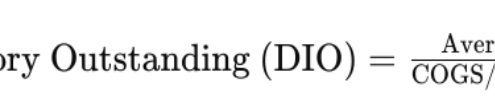
Formula for DIO
This is the inventory days outstanding formula:
How to Improve Days Inventory Outstanding
To get a better DIO, work on handling your inventory better. Set up just-in-time inventory systems to cut down on extra stock, improve the accuracy of your demand forecasts, and build smart relationships with your suppliers to make sure deliveries happen on time.
Invest in inventory management tools to keep track of and analyze stock levels easily, and streamline production processes to cut down on lead times. Review and change your inventory policies regularly to keep up with changing market wants and business requirements.
Frequently Asked Questions About Days Inventory Outstanding (DIO)
What are the factors that can affect DIO?
DIO can be affected by many things, such as changes in the demand for its goods, problems in the supply chain, outdated inventory, production delays, and new pricing strategies.
How does DIO differ from other inventory management metrics?
DIO in finance is all about the time it takes to sell inventory, while other business metrics like inventory turnover ratio track how often inventory is sold and restocked. DIO offers a perspective on inventory management that emphasizes the importance of time.
What is a good DIO benchmark?
There is no one-size-fits-all ideal DIO, as it can differ depending on the industry and the company. Typically, it’s better to have lower DIO values because they show that inventory management is efficient. However, it’s important to compare DIO with industry benchmarks and historical performance for a more meaningful analysis.
How can a company improve its DIO?
To boost their DIO, businesses can enhance their inventory forecasting methods, optimize their inventory levels, shorten supply chain lead times, adopt JIT inventory systems, and refine their demand planning procedures.
Is DIO the only metric to consider for inventory management?
No. It’s also important to consider other inventory management metrics like inventory turnover ratio, days sales of inventory (DSI), and inventory-to-sales ratio to get a complete picture of inventory performance.
Can DIO vary seasonally?
In addition to fluctuations in demand, production schedules, and inventory levels, DIO might fluctuate seasonally. When evaluating DIO trends and performance, companies need to take seasonal fluctuations into consideration.
How often should DIO be monitored?
To track changes in inventory management efficiency and identify areas for improvement, DIO should be monitored often, usually monthly or quarterly.
Read More >>>

Matt Garrett is the Founder and Chief Executive Officer of TGG. He is a regular speaker across the country on behalf of Vistage educating business owners on the need for sound financial practices, and is Vice President of the Board of Directors of FINACA. Under Matt’s leadership, TGG has received the following recognition: INC. 5000 top companies in the U.S. five years in a row; one of “San Diego’s Fastest Growing Companies” the past four years; and is among San Diego’s “Best Places to Work.”